
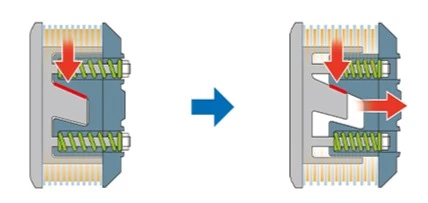
A slipper clutch is a type of clutch used in vehicles with manual transmissions, most commonly motorcycles. Its main function is to prevent excessive wear and rear tire slip during braking and downshifting.
When using a conventional clutch on track, the rear wheel locks up during hard braking. This lock-up happens because braking torque is applied to a wheel that carries very little normal load, due to the significant load transfer taking place. This lock-up, combined with low vertical load, causes the wheel to “hop” on the asphalt, creating instability as the rider approaches the corner. In the past, professional riders used the clutch lever to manage this phenomenon, since disengaging the transmission cancels out engine braking on the rear wheel.

How the slipper clutch works
The clutch is made up of several components, including the clutch disc, the pressure plate, the engine flywheel, and the cable or hydraulic actuation cylinder.
The clutch disc is a circular metal piece with friction material on both sides. It’s pressed against the pressure plate by springs and a lever system, allowing engine torque to be transmitted to the transmission. The pressure plate is a plate-shaped pressure device that, when pressed against the clutch disc, provides the force needed to transmit engine torque to the transmission.
The engine flywheel is a large-mass metal disc mounted on the engine shaft that acts as a reservoir of kinetic energy. When the clutch is released, the clutch disc is pressed against the flywheel, allowing engine torque to be transmitted to the transmission.

How the slipper clutch differs
What sets the slipper clutch apart from other clutch types is that the moving disc can slip against the fixed disc, allowing the rear wheel to spin faster than the engine during deceleration. This matters because, without a slipper clutch, the rear wheel could lock up and/or slide during deceleration, creating instability as the rider approaches the corner.

The construction of a slipper clutch is identical to a conventional one, except for the lower section, which has a ramp: when rotating in the engine’s direction, the system stays engaged, transmitting torque; when rotating in the opposite direction (when wheel torque exceeds engine torque), the lower section moves away from the assembly, disengaging the clutch.

Once the slipper clutch engages, the rider can start rotating the motorcycle even before entering the corner. This technique allows for a higher corner entry speed, since part of the rotation has already taken place. In the video below, you can see the moment the clutch slips, marked by a sharp drop in engine RPM. At this moment, the rear wheel slides toward the opposite direction of the corner, rotating around the Z axis (yaw).
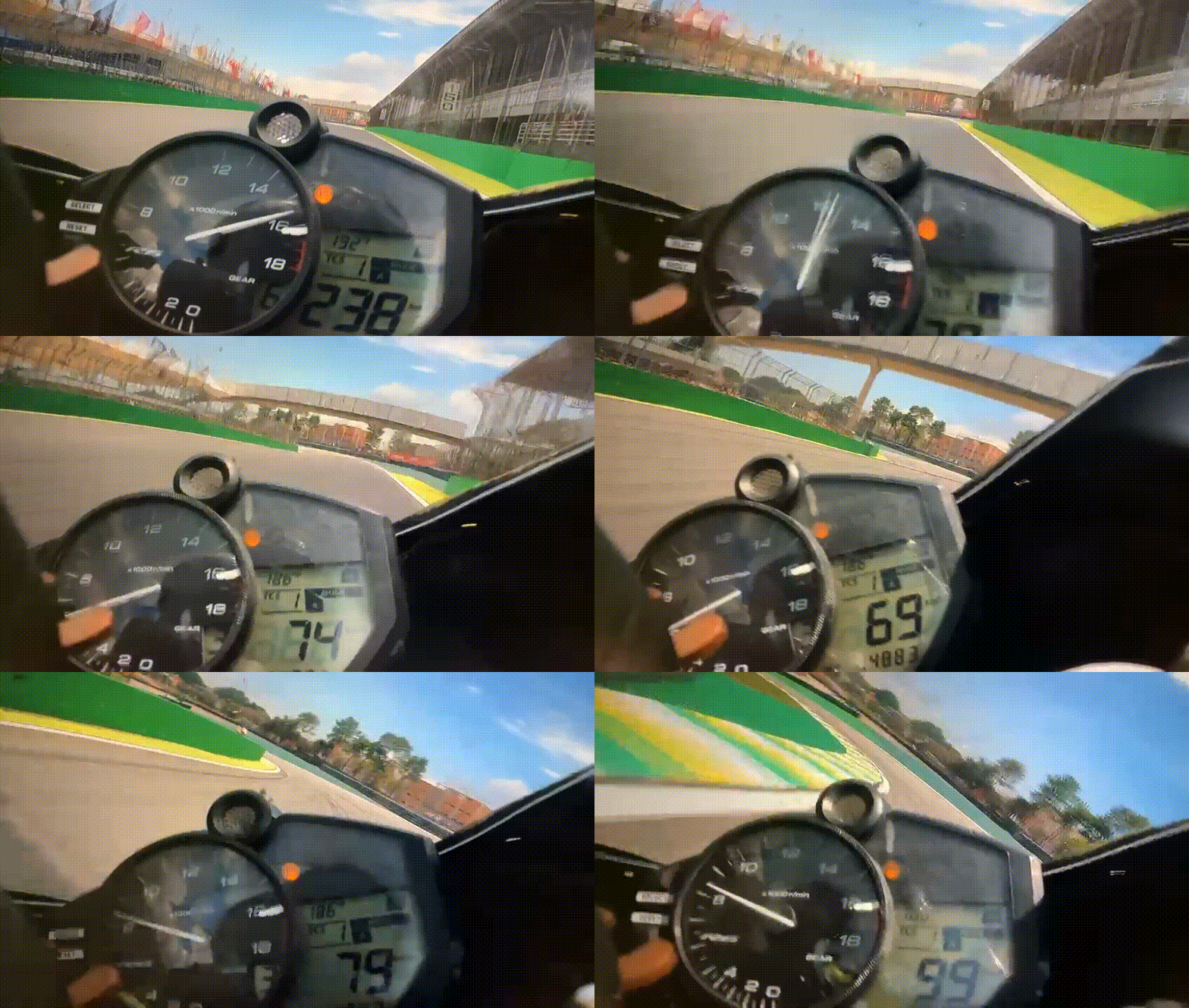
The downside of frequently using this technique is increased temperature in a specific area of the tire, since there’s high friction near the tire shoulder over an extended stretch. Exceeding the tire’s working temperature limit can lead to a breakdown of its structure, but that’s a topic for a future article.
Slipper clutch setup
There are a few different setup options available for slipper clutches. One parameter that can be adjusted is the spring rate of the springs that hold the upper cover engaged. The stiffer the spring, the more resistance the clutch has to opening. For example, swapping in a softer spring means that as soon as the rider closes the throttle, the rear wheel will move freely more quickly. Swapping in a stiffer spring setup increases resistance to the wheel’s free movement, resulting in more engine braking. In Moto2, the spring options available for Suter and STM clutches are: 80, 90, 100, and 110 N/m.
In short, the slipper clutch is an effective solution for managing increased engine power and torque, preventing loss of traction and motorcycle instability in corners. With the ability to slip gradually instead of fully disengaging, the slipper clutch allows riders to maintain control and speed while approaching tight corners and decelerating quickly. While there may be some trade-offs in terms of durability and maintenance, the slipper clutch is a valuable technology that can make the difference in high-level racing and riding challenges. Thanks to its refined technical operation, it has become a crucial component for teams and riders looking to improve their performance on track.


